Vietnam Slow Travel Itinerary: A Relaxed Way to Explore the Country
Slow travel in Vietnam is about doing less and experiencing more. Instead of changing hotels every night, rushing between attractions and spending half your vacation in airports, a slower itinerary gives you time to enjoy Vietnamese food, sit in cafés, walk through old neighborhoods, meet people, explore countryside roads and simply watch daily life unfold. Vietnam is particularly well suited to this style of travel because Hanoi, Hoi An, Hue, the Mekong Delta and other destinations each have enough character to reward several days rather than a quick visit. Official Vietnam travel itineraries also use multi-night stays in places such as Hanoi, Hoi An, Hue and the Mekong Delta, making them useful destinations for a slower journey.
What Is Slow Travel in Vietnam?
A slow Vietnam itinerary does not mean traveling slowly in every practical sense. It means choosing fewer destinations, staying longer, reducing unnecessary transfers and allowing yourself time to experience each place. Instead of visiting Hanoi for one night, Ha Long Bay for one night, Hoi An for one night and then immediately flying south, you might spend four nights in Hanoi, three nights in Hoi An and three or four nights in Ho Chi Minh City. You still see major highlights, but the journey feels more like a holiday and less like a checklist.
The Best Slow Travel Route Through Vietnam
For a first-time visitor with around two weeks, a particularly comfortable route is:
Hanoi → Ha Long Bay → Hoi An → Hue → Ho Chi Minh City → Mekong Delta
For three weeks, you can add Sapa, Ha Giang, Phong Nha or a beach destination without making the trip feel rushed.
The principle is simple: stay longer and travel less frequently.
Vietnam Slow Travel Itinerary: 14 Days
Day 1: Arrive in Hanoi
Start your slow Vietnam journey in Hanoi. After arriving at Noi Bai International Airport, transfer to a centrally located hotel around Hoan Kiem, the Old Quarter or the French Quarter. Do not schedule a demanding tour on your first day. Check in, take a gentle walk around Hoan Kiem Lake, explore a few streets and stop for Vietnamese coffee. In the evening, have a relaxed dinner and try your first bowl of phở, bún chả or another Hanoi specialty. The objective is not to see everything but to become comfortable with the city.
Day 2: Hanoi Without Rushing
Spend your second day exploring Hanoi’s historic side. Visit the Temple of Literature, Ho Chi Minh Complex, One Pillar Pagoda and Hoan Kiem Lake, but leave enough time between attractions. Have a long Vietnamese lunch rather than eating quickly between sightseeing stops. In the afternoon, return to the Old Quarter and wander without a fixed route. Sit in a café, browse small shops or watch the streets from a quiet corner. Hanoi rewards travelers who are willing to pause and observe.
Day 3: Hanoi Food and Street Life
Make day three about food. Join a private food experience or explore Hanoi’s cuisine with a knowledgeable guide. Sample several dishes rather than spending the day in one restaurant. Try bún chả, bánh cuốn, phở, chả cá, Vietnamese desserts and egg coffee. Take your time between stops. In the evening, explore Hanoi after dark and enjoy the atmosphere around Hoan Kiem Lake. A slow traveler does not need another ten attractions today; one good meal and a memorable neighborhood experience can be enough.
Day 4: Hanoi by Bicycle or Vespa
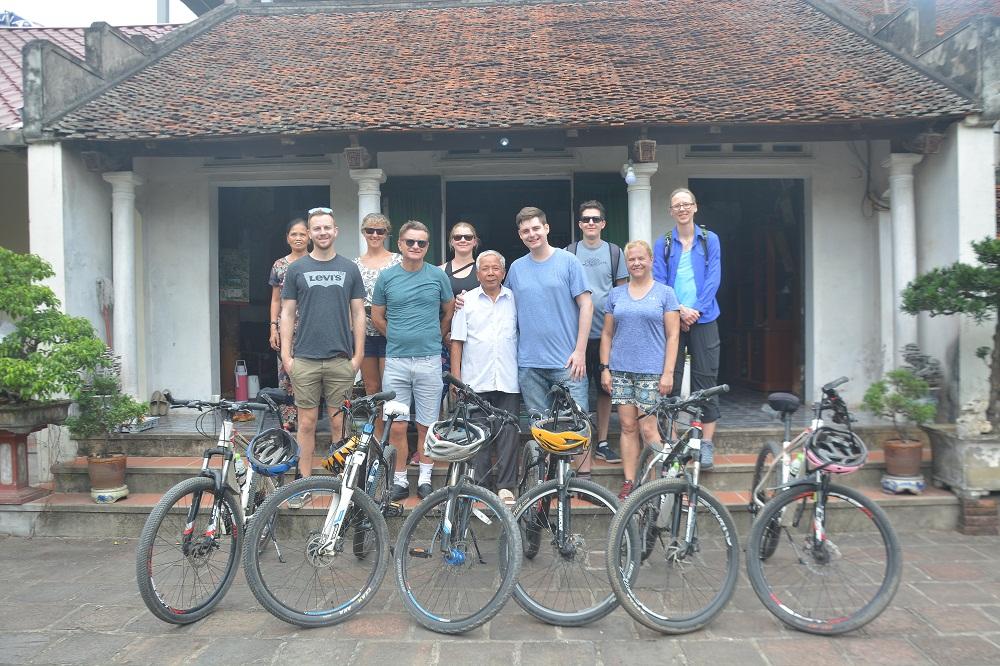
Use your fourth day to see a quieter side of Hanoi. A bicycle or Vespa experience can take you beyond the busiest streets toward Long Bien Bridge, riverside areas, residential neighborhoods and countryside landscapes. The purpose is not simply to cover more distance. It is to see how Hanoi changes from one neighborhood to another. Stop for photographs, coffee or food along the way. A guided two-wheel experience is particularly convenient for international visitors because you can concentrate on the scenery instead of worrying about navigating traffic.
Day 5: Hanoi to Ha Long Bay
Travel to Ha Long Bay and spend the night on a quality cruise. Slow travel does not mean avoiding famous attractions; it means experiencing them properly. Instead of arriving for a rushed day trip, an overnight cruise gives you time to enjoy the limestone scenery, kayaking, caves, meals, sunset and sunrise. Vietnam’s official itineraries similarly place an overnight Ha Long Bay experience between Hanoi and Central Vietnam. Spend the evening on deck rather than trying to participate in every scheduled activity.
Day 6: Ha Long Bay to Hoi An
After a relaxed morning on the cruise, return to shore and continue toward Hanoi Airport for a flight to Da Nang, followed by a private transfer to Hoi An. This is one of the few days when you will have a substantial transfer because Vietnam is geographically long. The secret to making it feel comfortable is not to add sightseeing around the transfer. Once you arrive in Hoi An, check into your hotel and spend the evening walking around the Ancient Town. Enjoy dinner beside the Thu Bon River and allow the town’s atmosphere to become your main evening experience.
Day 7: Hoi An Ancient Town
Spend the whole day in Hoi An without trying to visit every attraction. Walk through the old streets, visit historic merchant houses, explore the market and stop for coffee. Hoi An is particularly suited to slow travel because much of the historic center can be explored on foot and the pedestrian-friendly streets encourage travelers to move at a relaxed pace. Have a long lunch and spend the afternoon shopping, photographing architecture or simply sitting beside the river. Return after sunset to see the Ancient Town under lantern light.
Day 8: Hoi An Countryside
Today, leave the Ancient Town behind and explore the surrounding countryside. A bicycle tour can take you through rice fields, vegetable gardens, waterways and small villages. Alternatively, arrange a private car experience if cycling is not suitable for you. Add a Vietnamese cooking class or market visit if food interests you. The important thing is to avoid stacking several tours into one day. One countryside experience followed by a long lunch and a free afternoon is more consistent with slow travel.
Day 9: Hoi An Beach and Free Time
Keep day nine almost completely open. Spend the morning at An Bang Beach, relax at your hotel, return to a restaurant you enjoyed or explore small shops. Families can enjoy pool time, couples can schedule a private dinner and photographers can use the day to explore Hoi An at their own pace. This is one of the biggest advantages of a slow itinerary: you have enough time to revisit somewhere rather than constantly searching for the next attraction.
Day 10: Hoi An to Hue
Travel from Hoi An to Hue by private car via the Hai Van Pass. Make the journey part of the experience rather than treating it as a simple transfer. Stop at scenic viewpoints and around Lang Co if the conditions and timing are suitable. Arrive in Hue and check into a centrally located hotel. Spend the late afternoon beside the Perfume River or simply enjoy the hotel. A slower trip allows you to appreciate Hue’s quieter atmosphere after the busier energy of Hanoi and Hoi An.
Day 11: Hue Imperial City
Spend the entire day discovering Hue’s imperial heritage. Visit the Imperial Citadel and then choose one or two additional historic sites rather than attempting to see every royal tomb in one day. Take a leisurely lunch and leave the afternoon flexible. In the evening, explore Hue’s distinctive cuisine. Try bún bò Huế, bánh bèo, bánh nậm or bánh lọc. Hue is a perfect place to slow down because its historical character is best appreciated when you have time to notice architectural details rather than rushing between landmarks.
Day 12: Hue Culture and Free Time
Use your second day in Hue for a slower cultural experience. Visit Thien Mu Pagoda, explore a royal tomb or arrange a private cultural tour. You can also spend part of the day enjoying a café beside the Perfume River. The goal is to experience a different rhythm rather than adding another long list of attractions. Vietnam’s longer official itineraries give Hue multiple days, which reinforces how well the city fits a slower journey.
Day 13: Hue to Ho Chi Minh City
Take a domestic flight from Hue to Ho Chi Minh City. After checking into your hotel around District 1 or District 3, avoid scheduling a major excursion. Take a relaxed walk around Nguyen Hue Walking Street, visit a café and enjoy dinner. Ho Chi Minh City is energetic enough without an organized itinerary. Spend your first evening simply observing the city, tasting Southern Vietnamese food and becoming familiar with your neighborhood.
Day 14: Ho Chi Minh City at a Slow Pace
For your final day, choose only a few experiences. Visit Reunification Palace or the War Remnants Museum in the morning, have a long lunch and spend the afternoon exploring cafés, markets or a neighborhood that interests you. Alternatively, arrange an evening food or motorbike experience and explore the city after dark. The best conclusion to a slow journey is not another rushed sightseeing day but an afternoon with no fixed schedule.
A 21-Day Slow Travel Vietnam Itinerary
With three weeks, the concept becomes even more enjoyable.
Days 1–4: Hanoi — History, food, coffee, Old Quarter, countryside and two-wheel experiences.
Day 5: Ha Long Bay — Overnight cruise.
Days 6–9: Hoi An — Ancient Town, countryside, food, beach and free time.
Days 10–12: Hue — Imperial City, royal tombs, cuisine and cultural experiences.
Days 13–15: Optional Mountain or Beach Destination — Choose Sapa, Ha Giang, Phong Nha or Nha Trang according to your interests.
Days 16–18: Ho Chi Minh City — History, food, markets and neighborhood exploration.
Days 19–20: Mekong Delta — Slow river and countryside experience.
Day 21: Ho Chi Minh City — Final morning and departure.
Vietnam’s longer itinerary planning resources similarly combine multiple nights in Hoi An, Hue, Ho Chi Minh City and the Mekong Delta, showing that a slower multi-region journey is practical when travelers have more time.
Why Hanoi Is Excellent for Slow Travel
Hanoi is not a destination you need to rush through. Stay three or four nights and allow yourself to experience different parts of the city. One day can focus on history, another on food, another on cycling or Vespa exploration, and another simply on cafés and neighborhoods. The official tourism itinerary itself gives Hanoi multiple days before travelers continue toward Ha Long Bay.
Why Hoi An Is Perfect for Slow Travel
Hoi An may be one of the easiest places in Vietnam to slow down. The Ancient Town is compact, walkable and filled with cafés, restaurants, historic buildings, shops and riverside spaces. Beyond the center, you can cycle through green countryside or spend time at the beach. Official Vietnam travel resources also recommend combining Hoi An’s Ancient Town with countryside and cycling experiences.
Why Hue Deserves More Than One Night
Hue is often reduced to a quick stop between Hoi An and another destination. That is a mistake for slow travelers. Two or three nights allow you to explore the Imperial Citadel, royal tombs and pagodas without rushing. More importantly, you have time to appreciate Hue’s food and the quieter atmosphere along the Perfume River.
Why the Mekong Delta Works Well for Slow Travel
The Mekong Delta is almost the opposite of a fast-paced city itinerary. Boat rides, village roads, fruit gardens, waterways and agricultural landscapes encourage a slower rhythm. Rather than treating the Delta as a three-hour stop between Ho Chi Minh City attractions, consider spending one or two nights there. Vietnam’s official itineraries include both day-trip and overnight versions of the Mekong experience.
The Best Transportation for Slow Travel
Slow travel does not mean refusing flights. It means choosing transportation based on the experience and distance. Use domestic flights for long transfers such as Hue to Ho Chi Minh City, private cars for scenic routes such as Hoi An to Hue, bicycles for countryside exploration, Vespa or motorbike experiences for city discovery, boats in Ha Long Bay and the Mekong Delta, and walking whenever the destination is compact enough.
Slow Travel by Bicycle
Cycling is particularly compatible with this style of travel because you experience the landscape at a human pace. In Hanoi, a bicycle can take you beyond the busiest central streets. Around Hoi An, cycling through rice fields and countryside provides a completely different experience from walking through the Ancient Town. You do not need to cycle for six hours; even a half-day ride can transform the way you see a destination.
Slow Travel by Vespa
A Vespa experience can also be slow travel when the purpose is exploration rather than speed. Instead of racing between ten attractions, choose a route with several meaningful stops, a long Vietnamese meal, coffee and time to photograph neighborhoods. For international visitors, a private Vespa experience led by women can provide a comfortable way to explore Hanoi while learning about the city from a female guide and professional driver.
Slow Travel Is Not About Seeing Nothing
Some travelers misunderstand slow travel as staying in a hotel all day. It is not. You can still visit the Imperial Citadel, cruise Ha Long Bay, explore Hanoi, cycle through Hoi An and experience the Mekong Delta. The difference is that you give yourself enough time around those experiences. One important attraction with several hours to enjoy it is often more memorable than five attractions visited in a rush.
Slow Travel for Food Lovers
Food is one of the strongest reasons to travel slowly in Vietnam. Staying several nights in one city means you can try different restaurants, return to a dish you enjoyed and explore markets without worrying about catching the next bus. In Hanoi, spend several evenings discovering regional specialties. In Hoi An, explore Central Vietnamese cuisine. In Hue, focus on its distinctive dishes. In Ho Chi Minh City, move beyond tourist restaurants and explore Southern flavors.
Slow Travel for Couples
Couples can make the most of a slow itinerary by staying longer in fewer hotels. Choose a boutique property in Hanoi, a quality cruise in Ha Long Bay, a charming hotel in Hoi An and a comfortable city hotel in Ho Chi Minh City. Private food tours, Vespa experiences, countryside cycling and relaxed dinners work particularly well because there is no need to coordinate with a large group.
Slow Travel for Families
Families often benefit even more from a slower schedule. Children have time to sleep, swim and recover between sightseeing days. Instead of moving every morning, stay three or four nights in Hoi An and use it as a base for food, countryside and beach experiences. Private transportation also reduces the stress of moving luggage and coordinating several families or children.
Slow Travel for Older Travelers
A slower itinerary can also be more comfortable for mature travelers. Reduce long walking days, schedule regular breaks and use private transportation when appropriate. Hanoi, Hoi An and Hue can all be experienced at a relaxed pace when sightseeing is divided across several days. There is no advantage in trying to visit eight monuments in one afternoon.
Slow Travel for Solo Travelers
Solo travelers can use the additional time to connect more deeply with destinations. Stay in central neighborhoods, join a small guided food or bicycle experience and leave afternoons free. The slower pace makes it easier to return to places you like and to meet other travelers without constantly thinking about the next transfer.
Slow Travel and Luxury
Luxury slow travel is not simply about five-star hotels. True comfort comes from having time. A private car waiting when needed, a high-quality hotel in a convenient location, a private guide, a well-designed food experience and several free afternoons can be more valuable than adding another destination. Luxury works especially well with slow travel because the journey becomes more about quality than quantity.
How Many Days Should You Spend in Each Destination?
A useful rule is:
Hanoi: 3–4 nights.
Ha Long Bay: 1–2 nights.
Hoi An: 3–4 nights.
Hue: 2–3 nights.
Ho Chi Minh City: 3–4 nights.
Mekong Delta: 1–2 nights.
You can adjust these numbers according to your interests, but the overall principle should remain: fewer hotel changes, longer stays.
What to Leave Out of a Slow Travel Itinerary
You do not need every major destination. If you have 14 days, adding Hanoi, Sapa, Ha Long Bay, Ninh Binh, Hoi An, Hue, Da Nang, Ho Chi Minh City and the Mekong Delta will probably make the trip feel rushed. Choose a route that makes geographical sense and accept that some destinations can wait for your next visit.
A Simple Slow Travel Rule
Before adding a destination, ask:
“Would I rather spend two more nights where I am, or add another place to my itinerary?”
Very often, two additional nights will produce a better trip.
You might discover a favorite restaurant, take a spontaneous bicycle ride, spend an afternoon at a café or simply have enough energy to enjoy the evening.
Slow Travel Packing Tips
Traveling slowly also makes packing easier. Bring versatile clothes, comfortable walking shoes, a light jacket, rain protection, swimwear, sunscreen, a small day bag, power bank and essential documents. You do not need three weeks of clothing. Use hotel laundry services and keep your luggage manageable. A smaller suitcase becomes especially useful when your itinerary includes domestic flights and private road transfers.
Slow Travel Itinerary: Quick Comparison
| Trip Length | Recommended Style | Main Route |
|---|---|---|
| 7 Days | One or two regions | Hanoi + Ha Long Bay or Hoi An + Hue |
| 10 Days | Classic highlights | Hanoi + Ha Long Bay + Hoi An + Hue + Ho Chi Minh City |
| 14 Days | Comfortable multi-region | Hanoi + Ha Long Bay + Hoi An + Hue + Ho Chi Minh City + Mekong Delta |
| 21 Days | True slow travel | Hanoi + Ha Long Bay + Hoi An + Hue + optional mountains/beach + Ho Chi Minh City + Mekong Delta |
Final Thoughts
A Vietnam Slow Travel Itinerary is about changing the way you measure a successful trip. Instead of counting how many attractions you visited, think about how many experiences you actually enjoyed. A morning drinking Vietnamese coffee in Hanoi, an afternoon cycling through Hoi An’s countryside, a sunset from a Ha Long Bay cruise, a quiet evening beside the Perfume River or a boat ride through the Mekong Delta can become the memories you remember long after the famous landmarks.
For a first visit, 14 days is an excellent starting point, while 21 days gives you even more freedom to add mountains, beaches or countryside without sacrificing relaxation. Vietnam’s own longer itineraries demonstrate that destinations such as Hanoi, Hoi An, Hue and the Mekong Delta can comfortably receive multiple days rather than being treated only as quick stops.
Travel less. Stay longer. Eat slowly. Walk more. Leave room for unexpected moments. That is the beauty of slow travel in Vietnam.
Plan Your Vietnam Slow Travel Journey With Vietnam Women Travel
Vietnam Women Travel – Premium Private Tours Led by Women creates private journeys for international travelers who want to discover Vietnam at a comfortable pace. Instead of filling every day with attractions, a private itinerary can combine longer hotel stays, private transportation, women-led cultural experiences, carefully selected food experiences and free time.
A slow journey can begin in Hanoi and continue through Ha Long Bay, Hoi An, Hue, Ho Chi Minh City and the Mekong Delta, with optional mountain, countryside or beach destinations depending on the time available.
The focus is on private tours led by women, thoughtful pacing and experiences that allow travelers to understand Vietnam rather than simply pass through it.
Contact Vietnam Women Travel – Premium Private Tours Led by Women
VIETNAM WOMEN TRAVEL – PREMIUM PRIVATE TOURS LED BY WOMEN
Address: 91 Tho Nhuom Street, Hoan Kiem District, Hanoi, Vietnam
Phone / WhatsApp / iMessage 24/7: +84 988 402 008
Email: info@vietnamwomentravel.com
Website: vietnamwomentravel.com
Private Tours Led by Women – Premium Vietnam Experiences for International Travelers
Give Vietnam more time, and Vietnam will give you more memorable experiences in return.
