Vietnam Transportation: Complete Guide to Getting Around Vietnam
Vietnam transportation is diverse, affordable, and surprisingly convenient once you understand how the country is organized. Travelers can choose between domestic flights, trains, sleeper buses, private cars, taxis, ride-hailing services, motorbikes, bicycles, boats, and ferries. The best option depends on the distance, destination, budget, travel style, and amount of time available. For a short premium vacation, domestic flights combined with private transfers are usually the most efficient choice. Travelers with more time may prefer trains, sleeper buses, or scenic road journeys. Within major cities, taxis, ride-hailing services, walking, bicycles, and motorbike tours provide practical ways to explore.
Understanding Transportation in Vietnam
Vietnam is a long country, so transportation planning should be part of your itinerary from the beginning. Hanoi in the north and Ho Chi Minh City in the south are separated by a very substantial distance, while destinations such as Hue, Da Nang, Hoi An, Nha Trang, and Phan Thiet lie between them. A journey that looks short on a map can take many hours by road or train. Vietnam Tourism notes that a train journey between Hanoi and Ho Chi Minh City can take around 30–36 hours, while flights between major cities can reduce some long-distance journeys to roughly one or two hours in the air.
For this reason, travelers should avoid choosing transportation based only on ticket price. Consider the total travel time, airport or station transfers, luggage, comfort, departure schedules, and how much sightseeing time you will lose.
Domestic Flights in Vietnam
Domestic flights are generally the fastest way to travel between Vietnam’s major regions. They are particularly useful for travelers with limited vacation time who want to combine Hanoi, Central Vietnam, and Ho Chi Minh City.
Common domestic routes include Hanoi to Da Nang, Hanoi to Ho Chi Minh City, Ho Chi Minh City to Da Nang, Hanoi to Nha Trang, Ho Chi Minh City to Phu Quoc, and Hanoi to Phu Quoc. Depending on your itinerary, flying can save an entire day compared with traveling overland.
Vietnam’s major domestic carriers include Vietnam Airlines, Vietjet Air, Bamboo Airways, and Pacific Airlines. Flight schedules and fares can vary, so travelers should compare departure times as well as prices.
When Should You Fly in Vietnam?
Flying is the best choice when traveling between distant regions and when your itinerary is relatively short. For example, if you have 10 days and want to experience Hanoi, Hoi An, and Ho Chi Minh City, flying between the regions allows you to spend more time sightseeing.
For premium travel, domestic flights are particularly useful because they reduce long overland journeys and make it possible to maintain a comfortable pace.
Vietnam Airports
Vietnam has airports serving the country’s major tourist destinations and economic centers. The principal international gateways include Noi Bai International Airport in Hanoi, Tan Son Nhat International Airport in Ho Chi Minh City, and Da Nang International Airport. Other important airports serve destinations such as Phu Quoc and the Nha Trang area through Cam Ranh International Airport.
When booking domestic flights, check the airport carefully because some destinations use airports located outside the city center. Allow enough time for airport transfers, security procedures, check-in, and possible traffic delays.
Keep your baggage receipt or luggage tag after checking a bag. Vietnam Tourism specifically advises travelers to retain luggage stubs because airport personnel may check them before passengers leave the terminal.
Trains in Vietnam
Train travel is an important part of Vietnam transportation and provides a slower way to see the country. Vietnam’s main railway network connects Hanoi with Ho Chi Minh City and passes through major destinations including Hue, Da Nang, Nha Trang, and other cities.
The railway covers approximately 2,600 kilometers, and trains generally travel much more slowly than aircraft. This makes train travel less efficient for travelers with limited time but attractive for those who enjoy scenic journeys and want to experience Vietnam at a slower pace.
Travelers can choose different classes, including hard seats, soft seats, and sleeper cabins. Four-berth cabins generally provide greater comfort than basic seating, while private tourist sleeping cars are available on selected routes.
Hanoi to Ho Chi Minh City by Train
The complete north-to-south train journey is a major overland experience. It can take roughly 30–36 hours depending on the service and schedule, making it substantially longer than flying.
Rather than traveling the entire distance by train, travelers who enjoy rail journeys can consider shorter sections, such as Hanoi to Hue or Hue to Da Nang, depending on the current timetable.
Sleeper Buses in Vietnam
Sleeper buses are popular among budget travelers and are particularly useful for routes between destinations in Northern, Central, and Southern Vietnam. Many long-distance buses use reclining seats or sleeper-style compartments, allowing passengers to travel overnight.
Common routes connect destinations such as Hanoi, Hue, Hoi An, Nha Trang, Da Lat, Mui Ne, and Ho Chi Minh City.
Sleeper buses can be good value because you combine transportation with overnight accommodation. However, comfort varies considerably between operators and vehicle types. Travelers should check departure and arrival locations carefully because bus stations may be outside the central tourist area.
For travelers who prioritize comfort, privacy, and predictable schedules, a private vehicle or domestic flight may be preferable.
Private Cars and Transfers
Private cars are one of the most comfortable forms of Vietnam transportation for couples, families, and private groups. A private driver allows travelers to control departure times, stop when necessary, carry luggage easily, and travel directly between hotels and attractions.
Private transportation is particularly useful for airport transfers, countryside excursions, multi-stop day trips, and journeys where public transportation does not provide a convenient direct connection.
For premium Vietnam travel, private cars can be combined with domestic flights to create an efficient door-to-door itinerary. Instead of spending hours waiting for shared transportation, travelers can leave their hotel at a convenient time and travel directly to the airport, station, attraction, or next hotel.
Taxis in Vietnam
Taxis are widely available in Vietnam’s major cities and tourist destinations. They are useful for airport transfers, short journeys, and situations where walking is impractical.
Travelers should use reputable taxi operators or book through reliable ride-hailing applications. Vietnam Tourism recommends established taxi companies such as Vinasun and Mai Linh and advises travelers to use the meter.
Before entering a taxi, check that the meter is running or confirm the agreed fare if the service uses a fixed price. At airports, use the official taxi pickup area rather than accepting unsolicited offers from people approaching passengers inside the terminal.
Grab and Ride-Hailing in Vietnam
Ride-hailing applications are widely used in Vietnam’s major cities. Travelers can book cars and motorbike rides through apps such as Grab, making them convenient for short urban journeys.
Ride-hailing is particularly useful when you want to know the estimated fare before confirming a journey. A local SIM or mobile data connection is helpful because these services rely on smartphone applications.
For airport arrivals, travelers with large luggage may find a private transfer more convenient than arranging a ride-hailing vehicle after landing.
Motorbikes in Vietnam
Motorbikes are an essential part of everyday transportation in Vietnam and are one of the most memorable ways to experience the country’s streets and countryside. In cities, motorbikes can be convenient for short distances, while longer journeys can provide access to mountain roads, coastal routes, and rural areas.
However, visitors should not underestimate Vietnamese traffic. Riding in Hanoi, Ho Chi Minh City, or on busy highways requires experience and confidence. Vietnam Tourism specifically advises novice riders to exercise caution and always wear a helmet.
If you are not an experienced rider, consider joining a guided motorbike or scooter tour with a professional driver rather than renting a motorbike and navigating unfamiliar traffic independently.
Motorbike Tours in Vietnam
A guided motorbike tour can combine transportation with sightseeing. Instead of simply using a motorbike to get from one attraction to another, travelers can explore neighborhoods, food streets, markets, historic areas, countryside roads, and viewpoints with an experienced driver or guide.
This can be particularly enjoyable in Hanoi and Ho Chi Minh City, where motorbikes provide a practical way to experience the energy of the streets. Guided rides are also available in destinations such as Central Vietnam and the country’s mountain regions.
For travelers who want the experience without the responsibility of driving themselves, a professional driver is an important consideration.
Bicycles in Vietnam
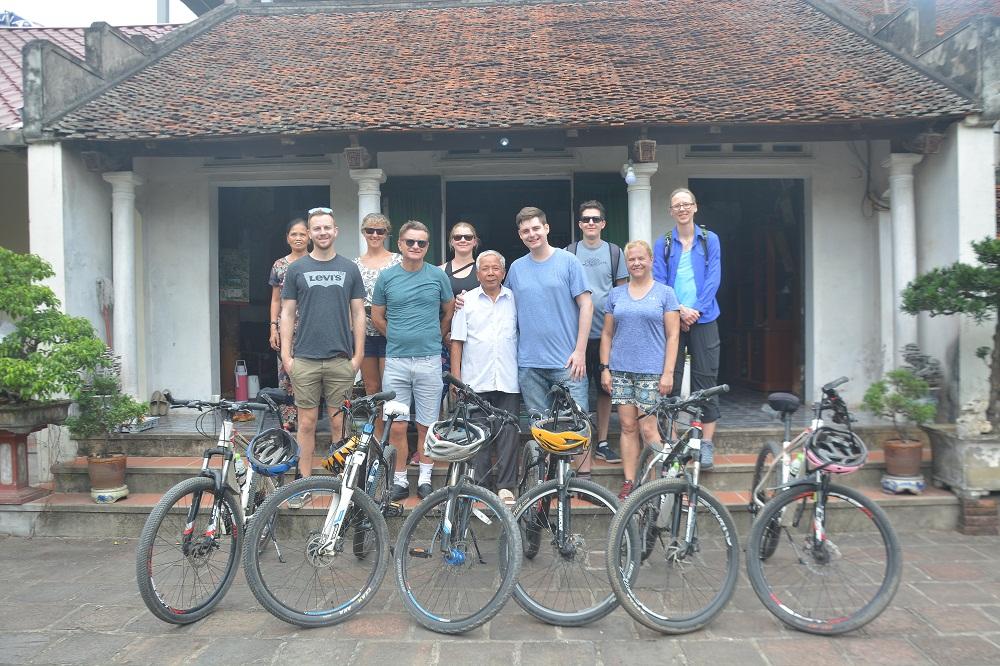
Cycling is an excellent option in smaller towns and countryside destinations where traffic is lighter. Hoi An, Hue, rural areas around major cities, and parts of the Mekong Delta can be enjoyable by bicycle.
Cycling allows travelers to move at a slower pace and experience agricultural landscapes, villages, waterways, and quiet roads. In hot weather, early morning or late afternoon is usually more comfortable than cycling during the middle of the day.
For longer cycling trips, choose routes according to your fitness level and weather conditions.
Electric Vehicles and E-Motorbikes
Electric mobility is becoming increasingly visible in Vietnam, particularly in urban tourism. Electric vehicles and e-motorbikes can provide a quieter alternative for sightseeing and short-distance transportation.
Travelers interested in an electric sightseeing experience should check the vehicle type, battery range, route, safety equipment, and whether a professional driver is provided. For visitors unfamiliar with Vietnamese traffic, having an experienced driver can be more important than the type of vehicle itself.
Boats and Ferries in Vietnam
Water transportation is essential in several parts of Vietnam. Ha Long Bay and Lan Ha Bay are best experienced by boat, while the Mekong Delta has an extensive network of rivers and canals.
Boats can also connect islands and coastal destinations. Ferry schedules can be affected by weather, especially during storms and periods of rough seas, so travelers should avoid arranging tightly timed onward connections immediately after a boat journey.
In destinations such as Phong Nha, boats are also part of the sightseeing experience, allowing visitors to travel along the Son River and reach caves.
Transportation in Hanoi
Hanoi is relatively easy to explore using a combination of walking, taxis, ride-hailing services, private cars, and guided motorbike experiences.
The Old Quarter and Hoan Kiem area are particularly suitable for walking, although the streets can be crowded and sidewalks may be occupied by parked motorbikes or street businesses. For destinations farther apart, taxis, ride-hailing services, or private transportation can save time.
A guided motorbike or scooter tour is an excellent option for travelers who want to see more neighborhoods in a limited amount of time while experiencing Hanoi’s traffic and street life.
Transportation in Ho Chi Minh City
Ho Chi Minh City is large and busy, so transportation planning is important. Walking works well within individual neighborhoods, but taxis, ride-hailing services, private cars, and motorbikes are useful when traveling between districts.
Traffic congestion can significantly affect journey times, especially during peak periods. If you have a flight, train, restaurant reservation, or scheduled tour, leave additional time for transportation.
Transportation in Hoi An
Hoi An’s Ancient Town is compact and is best explored on foot. Bicycles are also particularly useful because the surrounding countryside is relatively accessible and offers a quieter contrast to the historic center.
For airport transfers, longer excursions, and journeys to Da Nang or Hue, private cars and taxis are convenient. A private vehicle is especially useful for families or travelers with luggage.
Transportation in Hue
Hue’s main attractions are spread across the city and surrounding countryside. Walking is useful around the Imperial City, while taxis, private cars, bicycles, and motorbikes are more practical for reaching royal tombs and attractions farther away.
For travelers interested in history, a private car with a knowledgeable guide can be an efficient way to combine the Imperial City, royal tombs, pagodas, and other cultural sites in one day.
Transportation in the Mekong Delta
The Mekong Delta offers transportation experiences that are very different from major cities. Boats, ferries, bicycles, private cars, and smaller waterways can all form part of a journey.
Boat travel is particularly valuable because the waterways are central to life in the delta. Combining a private vehicle with a boat excursion allows travelers to explore both the countryside and river systems without depending entirely on public transportation.
Transportation in Mountainous Vietnam
Destinations such as Ha Giang and Sapa require more careful transportation planning because of winding mountain roads, changing weather, and longer travel times.
Private cars with experienced drivers are a comfortable option for travelers who want to explore mountain landscapes without riding themselves. Guided motorbike journeys are another popular option for experienced travelers.
Mountain transportation should not be planned too tightly. Rain, fog, road conditions, and traffic can all affect journey times.
How to Choose the Best Transportation in Vietnam
The best transportation depends on the distance and purpose of the journey. For long distances, domestic flights are usually the most time-efficient. For scenic overland travel, trains can provide a memorable experience. For budget travel, sleeper buses can be practical. For city sightseeing, taxis, ride-hailing services, walking, bicycles, and motorbikes are useful. For comfort and flexibility, private cars are often the strongest option. For river and island destinations, boats and ferries become essential.
A good itinerary often combines several transportation methods rather than relying on one.
Best Transportation for a 7-Day Vietnam Trip
With only seven days, avoid spending large amounts of time on long overland journeys. A Hanoi-based itinerary can use private cars for nearby excursions and possibly a bay cruise. Alternatively, travelers can combine Hanoi with Central Vietnam by taking a domestic flight.
The goal should be to maximize sightseeing time rather than spend most of the vacation traveling between destinations.
Best Transportation for a 10-Day Vietnam Trip
Ten days gives you enough time to combine two or three major regions. A practical route could begin in Hanoi, continue to Central Vietnam by domestic flight, and finish in Ho Chi Minh City.
Use private transfers for airport and hotel connections and choose organized day trips or private vehicles for sightseeing. This approach provides significantly more flexibility than relying entirely on buses.
Best Transportation for a 14-Day Vietnam Trip
Two weeks allows a more comprehensive Vietnam itinerary. Travelers can begin in Hanoi, explore Northern Vietnam, fly to Central Vietnam, continue to Ho Chi Minh City, and add the Mekong Delta or a beach destination.
Domestic flights are particularly valuable on this type of itinerary because they prevent long-distance transportation from consuming several days.
Vietnam Transportation for Families
Families often benefit from private cars and pre-arranged airport transfers. Traveling with children means luggage, meal stops, bathroom breaks, and rest periods need to be considered.
A private vehicle provides greater flexibility than a shared bus or group transfer. Parents can adjust departure times and stop when necessary instead of following a fixed schedule.
Vietnam Transportation for Couples
Couples have more flexibility and can combine transportation types according to their interests. Domestic flights work well for long distances, while private cars provide comfortable transfers and personalized day trips.
For a more memorable experience, couples can also include a guided Vespa or motorbike tour, bicycle excursion, scenic boat journey, or private cruise.
Vietnam Transportation for Solo Travelers
Solo travelers have many transportation options, including domestic flights, trains, sleeper buses, ride-hailing services, motorbikes, and organized tours. Vietnam Tourism notes that domestic flights are often the smoothest option for moving between major destinations, while trains, sleeper buses, and limousine vans can be useful for travelers with more time.
Solo travelers should pay particular attention to transportation safety, luggage security, nighttime arrivals, and reliable pickup arrangements.
Transportation Tips for First-Time Visitors
Book important domestic flights and long-distance transportation in advance, particularly around major Vietnamese holidays. Check the departure and arrival location carefully because bus stations and airports can be outside the center of town. Keep your passport and valuables secure during transportation. Arrive early for flights and allow additional time for city traffic. When using taxis, choose reputable operators or reliable booking applications. If riding a motorbike, wear a proper helmet and only ride if you are legally permitted and genuinely comfortable with the traffic conditions.
Most importantly, do not judge transportation solely by ticket price. A cheap bus that takes 10 hours may not be better value than a short domestic flight if you have only a few days to explore Vietnam.
The Best Transportation Strategy for a Premium Vietnam Trip
For a premium Vietnam vacation, the most efficient approach is often a combination of domestic flights, private airport transfers, private cars, and carefully selected guided experiences. This minimizes unnecessary waiting, reduces long overland journeys, and gives travelers more control over their daily schedule.
For example, travelers can start in Hanoi, use private transportation for city sightseeing and Northern Vietnam excursions, fly to Da Nang, use a private vehicle for Hoi An and Hue, then fly to Ho Chi Minh City and continue by private car to the Mekong Delta. This creates a smooth route while preserving time for experiences rather than transportation.
Plan Your Vietnam Transportation with Vietnam Women Travel
Vietnam Women Travel specializes in premium private tours led by women, with transportation planned around each traveler’s itinerary, comfort level, schedule, and destination choices. Private airport transfers, domestic flights, private cars, guided motorbike experiences, boat journeys, and carefully arranged regional connections can be combined into one seamless travel plan.
Whether you are planning a private vacation for two, a family holiday, a friends’ trip, or a customized luxury journey, choosing the right transportation can make the difference between a rushed trip and a comfortable Vietnam experience.
Vietnam Women Travel – Premium Private Tours Led by Women.