Hanoi Vespa Tour With Local Food and Cultural Experiences
A Hanoi Vespa Tour With Local Food and Cultural Experiences combines three of the best ways to understand Vietnam’s capital: riding through its busy streets, tasting traditional Hanoi food, and visiting places where Vietnamese history and everyday culture are still visible.
Rather than spending the entire tour around famous monuments, a Vespa allows you to move between Hanoi’s Old Quarter, residential lanes, traditional markets, lakes, historical neighborhoods, the Red River, and agricultural areas. Bike Tours Hanoi’s Vespa programs are specifically designed around city sightseeing, food, markets, coffee, hidden streets, and countryside experiences.
What Makes a Hanoi Vespa Food and Culture Tour Different?
A conventional food tour may take you from one restaurant or street-food stall to another. A conventional sightseeing tour may take you from one monument to the next.
A Vespa food and culture experience combines both.
You ride through Hanoi between stops, so the streets themselves become part of the tour. You can see how people shop, work, eat breakfast, drink coffee, run small businesses, and move around the city.
This makes the experience particularly useful for travelers who want to understand how Hanoi is lived rather than simply photographed.
Ride Through Hanoi With an Experienced Guide
Guests ride as passengers behind experienced Vespa riders rather than driving themselves.
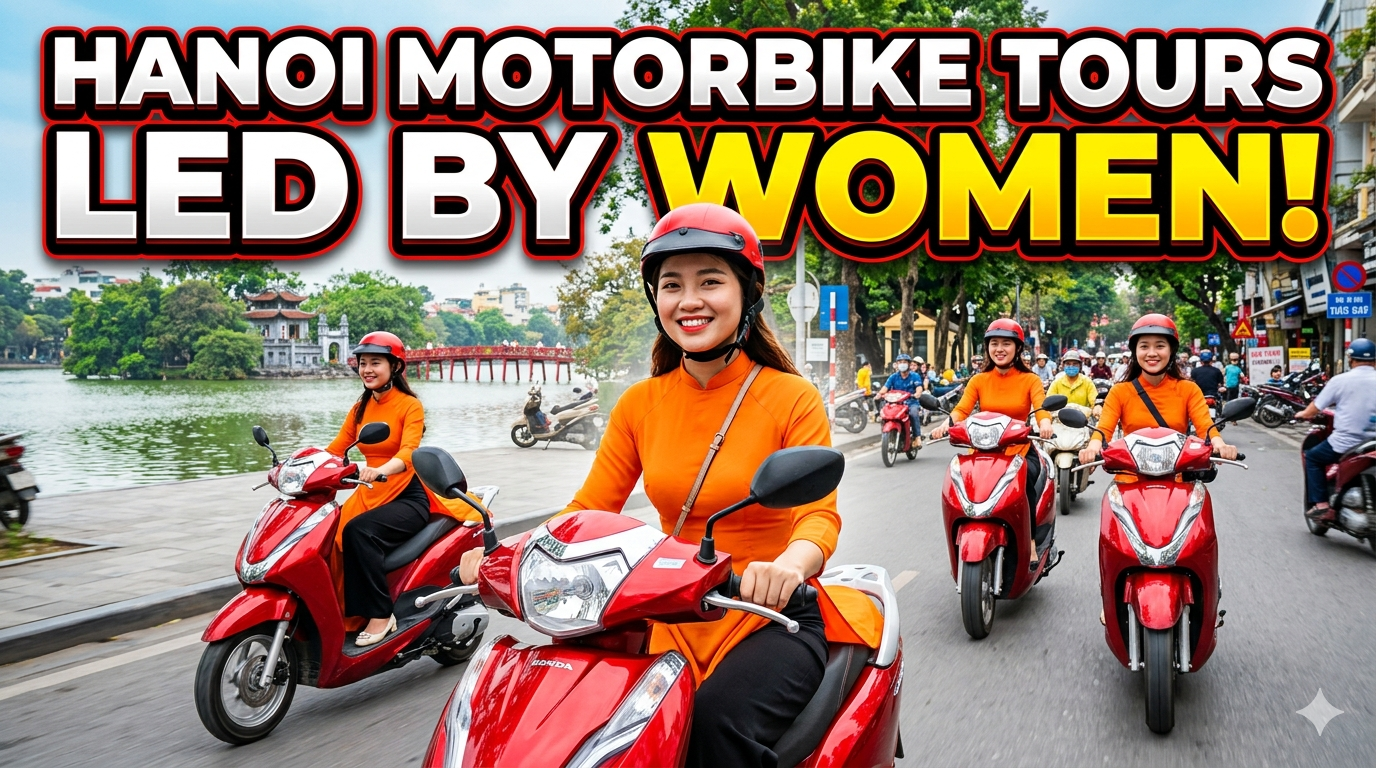
Bike Tours Hanoi’s published Vespa experiences are designed as pillion tours and use passenger scooters with backrests. The company also promotes experienced female riders and guides on its women-led Vespa programs.
You therefore do not need previous motorcycle experience.
Your rider takes care of navigation and Hanoi traffic while you concentrate on the scenery, food, photography, and cultural explanations.
Start With Hanoi’s Historic Streets
The route can begin around the Old Quarter and gradually move into less tourist-oriented parts of Hanoi.
The Old Quarter is known for its narrow streets and historic commercial buildings, but the city becomes even more interesting when you move beyond the main tourist roads.
Residential alleys, traditional tube houses, small cafés, markets, workshops, food stalls, and neighborhood businesses reveal another side of Hanoi.
A Vespa is particularly practical for this because it can move through narrow streets and connect several neighborhoods within a few hours.
Cross Long Bien Bridge
Long Bien Bridge is one of the most important landmarks on Hanoi Vespa routes.
The historic bridge crosses the Red River and provides views of the railway, riverbanks, agricultural land, boats, and Hanoi’s skyline.
For a cultural tour, Long Bien Bridge is more than a photography stop. It provides an opportunity to discuss Hanoi’s colonial history, transportation, the Red River, and the relationship between the city and the surrounding agricultural areas.
Early-morning rides are particularly atmospheric because commuters and vendors are already active.
Explore Banana Island
One of the most surprising places to visit by Vespa is Banana Island, beside the Red River.
Despite being close to central Hanoi, the area contains cultivated land, including banana trees, vegetables, beans, and corn.
Bike Tours Hanoi includes Banana Island in its published sunrise Vespa itinerary.
For visitors staying in central Hanoi, the contrast is striking. Within a relatively short ride, dense urban streets give way to agricultural landscapes.
This is an excellent cultural lesson for travelers who want to understand how modern Hanoi and traditional agriculture coexist.
Visit a Traditional Hanoi Market
Markets are an important part of Vietnamese food culture.
A neighborhood market gives you an opportunity to see fresh vegetables, herbs, fruit, meat, seafood, prepared foods, and household products being sold to residents.
Bike Tours Hanoi’s Vespa experiences include market visits and opportunities to see and taste tropical fruit.
The market also provides an excellent introduction to Vietnamese ingredients. You may recognize familiar foods while encountering herbs, vegetables, fruits, and spices that are less common outside Southeast Asia.
Taste Vietnamese Street Food
Food is one of the strongest parts of a Hanoi cultural experience.
Bike Tours Hanoi’s Vespa itineraries include Vietnamese dishes and drinks, with published routes featuring foods such as pho, banh mi, Bún Chả, Bánh Cuốn, Nem Rán, tropical fruit, and Vietnamese coffee depending on the selected tour.
Pho
Pho is probably the most internationally recognized Vietnamese dish.
In Hanoi, pho is particularly associated with breakfast and early-day eating. A traditional bowl combines rice noodles, broth, meat, herbs, and condiments.
The experience becomes more interesting when your guide explains how the dish fits into Hanoi’s daily routine rather than simply presenting it as a famous Vietnamese food.
Bún Chả
Bún Chả is one of Hanoi’s signature specialties.
It combines grilled pork, rice noodles, fresh herbs, vegetables, and a sweet-savory dipping sauce.
The grilled pork is typically cooked over charcoal, giving it a distinctive smoky aroma.
For travelers interested specifically in Hanoi cuisine, this is one of the dishes worth prioritizing.
Bánh Cuốn
Bánh Cuốn consists of thin steamed rice sheets filled with ingredients such as minced pork and wood-ear mushrooms.
The sheets are made fresh, making the preparation itself part of the experience.
A food-focused Vespa tour can provide an opportunity to see how this traditional dish is prepared before tasting it.
Nem Rán
Nem Rán, or Vietnamese fried spring rolls, combines a crispy exterior with a savory filling.
The dish is commonly served with dipping sauce and fresh herbs, demonstrating the Vietnamese preference for combining different textures and flavors in one meal.
Try Vietnamese Egg Coffee
No Hanoi food and culture itinerary should overlook coffee.
Hanoi has a particularly strong café culture, and cà phê trứng, or egg coffee, is one of the city’s best-known specialties.
Egg coffee combines strong Vietnamese coffee with a thick sweet egg mixture. The topping creates a creamy texture while the coffee underneath remains rich and intense.
Bike Tours Hanoi’s sunrise Vespa experience specifically includes Vietnamese breakfast and Hanoi egg coffee.
For many travelers, this becomes one of the most memorable stops because it provides time to sit down, talk with the guide, and watch Hanoi’s streets from a café.
Understand Hanoi’s Coffee Culture
Coffee in Hanoi is not simply a beverage.
Small cafés are part of everyday life. People meet friends, read, work, talk, use their phones, or sit quietly while watching traffic.
Some cafés are located inside narrow traditional buildings. Others occupy only a few meters of pavement.
A Vespa food tour can introduce you to this culture naturally, after riding through the neighborhoods where the cafés serve the people who live and work there.
Visit Huu Tiep Lake and the B-52 Wreckage
Food is only one part of the experience.
A cultural Vespa route can also include Huu Tiep Lake in Ngoc Ha, where the remains of a B-52 bomber can be seen in the water.
Bike Tours Hanoi includes Huu Tiep Lake among the highlights of its city Vespa experiences.
The location is especially interesting because the historical remains exist within an ordinary residential neighborhood.
You can see the contrast between wartime history and contemporary Hanoi: homes, gardens, narrow streets, cafés, and everyday life surround an important historical site.
Explore Residential Hanoi
The residential streets between major attractions are an essential part of the experience.
You may see:
- Narrow tube houses
- Small family shops
- Neighborhood cafés
- Street food stalls
- Repair businesses
- Flower vendors
- Small temples
- Residential courtyards
- Children going to school
- Residents preparing meals
These details are easy to miss from a large sightseeing vehicle.
From a Vespa, you remain close to street level and can observe the details while moving efficiently between different parts of Hanoi.
Discover West Lake and Truc Bach Lake
A city Vespa route can also take you toward West Lake and Truc Bach Lake.
The atmosphere changes significantly from the Old Quarter.
West Lake has wider roads, lakeside cafés, residential districts, temples, restaurants, and modern buildings. Truc Bach Lake provides another scenic environment close to the center of Hanoi.
These areas are especially enjoyable later in the afternoon or around sunset when the traffic and light create a different atmosphere from the morning.
Visit Hanoi Train Street
Some Vespa itineraries include Hanoi Train Street, one of the city’s most recognizable urban locations.
The railway passes through a densely populated neighborhood, creating an unusual combination of railway infrastructure and residential life.
For visitors, it is important to follow the guide’s instructions and current safety restrictions because this remains an active railway.
The cultural value is not simply the famous photograph. It is seeing how railway infrastructure became integrated into an extremely dense urban neighborhood.
Experience Vietnamese Food in the Countryside
If you choose a longer Vespa experience, the food journey can continue beyond central Hanoi.
Bike Tours Hanoi’s countryside routes travel toward the Red River and rural areas, where the scenery changes to vegetable farms, banana plantations, cornfields, villages, markets, and traditional homes.
A countryside lunch provides another opportunity to taste Vietnamese dishes away from the busiest central districts.
The longer route also allows more time to discuss agriculture, village life, traditional houses, and Vietnamese family traditions.
Visit a Traditional Family Home
One of the more distinctive cultural elements of Bike Tours Hanoi’s countryside Vespa itinerary is a visit to a traditional house.
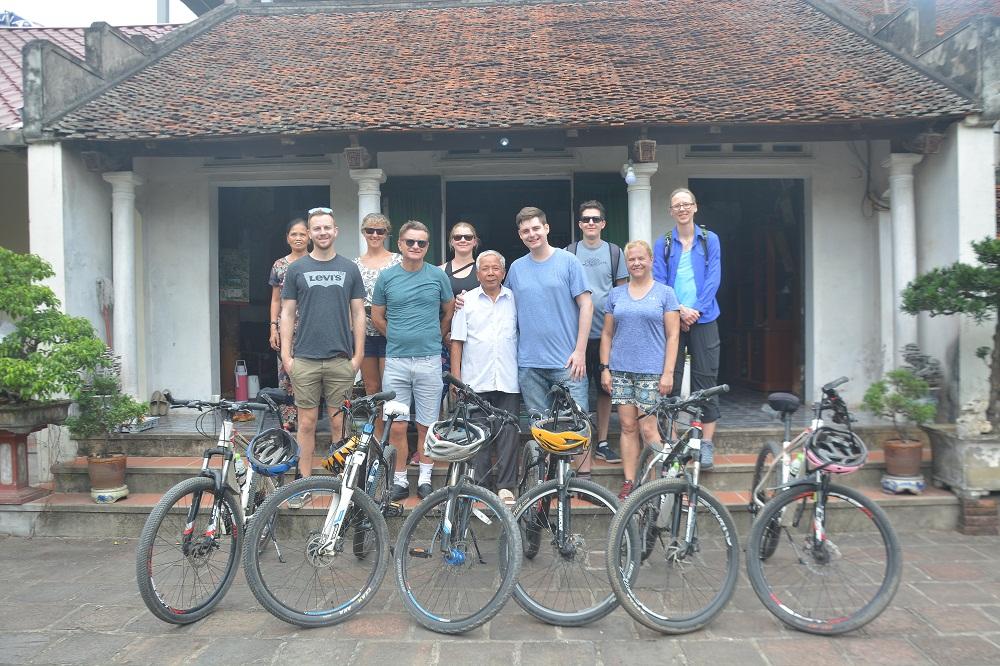
One published route includes a 200-year-old traditional house, where visitors can meet the family, enjoy tea and peanut candy, and learn more about rural Vietnamese life.
This type of stop adds something that a standard sightseeing tour cannot easily provide: direct human interaction.
Instead of simply looking at an old building, you can learn how the house has been used and how family life has changed over generations.
See Traditional Vietnamese Crafts
Longer Vespa routes can also include traditional craft villages.
Bike Tours Hanoi’s countryside itinerary includes Hoi Phu Village, where visitors can learn about traditional broom-making.
Craft villages are important because they show how specialized skills developed within rural communities and were passed from one generation to another.
For travelers interested in Vietnamese culture, seeing the production process can be much more memorable than buying a finished souvenir.
Visit a Bonsai Garden
A bonsai garden can also be included on countryside routes.
Vietnamese bonsai is both horticulture and artistic craftsmanship. Trees are carefully shaped and maintained over many years.
Visiting a bonsai garden provides a quieter cultural experience after the movement and noise of Hanoi’s streets.
It also gives photographers a very different subject from markets and traffic.
How Long Should a Food and Culture Vespa Tour Take?
The right duration depends on your priorities.
2.5 Hours
A 2.5-hour Vespa tour is suitable if you want a compact introduction to Hanoi.
The published city itinerary combines Long Bien Bridge, Red River areas, markets, lakes, residential streets, historical sites, food, and coffee.
3 Hours
A 3-hour sunrise Vespa experience, approximately 5:30 AM–8:30 AM, is ideal if you want breakfast and egg coffee as part of your cultural experience.
4–5 Hours
A half-day experience gives you more time for countryside scenery, markets, food, cultural stops, and traditional villages.
Full Day
A full-day route is the best option if you want to combine central Hanoi with the Red River countryside, farms, villages, Co Loa Ancient Citadel, food, and cultural experiences.
Why Choose a Private Vespa Food and Culture Tour?
A private tour is particularly useful for food-focused travelers because everyone’s tastes are different.
You may want to spend more time trying Vietnamese dishes, while another traveler may prefer photography or history.
With a private itinerary, your guide can focus more closely on your interests and adjust the pace accordingly.
This is especially useful for couples, families, photographers, and small groups.
Who Is This Hanoi Vespa Tour Best For?
This experience is particularly suitable for:
- First-time visitors to Hanoi
- Couples
- Families with teenagers
- Food lovers
- Coffee enthusiasts
- Photographers
- Travelers interested in Vietnamese history
- Visitors who want to explore residential neighborhoods
- Travelers who prefer active sightseeing
- People who want to see both Hanoi and the Red River countryside
It is also suitable for visitors who do not ride motorcycles themselves because the Vespa is operated by the professional guide.
What Should You Wear?
Comfortable clothing is best for a Vespa food and culture experience.
Wear:
- Comfortable trousers or shorts
- Breathable clothing
- Closed-toe shoes
- Sunglasses
- Sunscreen
- A light jacket for early-morning rides
- A small personal bag
Bike Tours Hanoi also recommends comfortable clothing and shoes, sunscreen, and sunglasses for its Vespa experiences.
What Is Included?
Depending on the selected itinerary, Bike Tours Hanoi’s Vespa experiences can include:
- Professional Vespa rider and guide
- Passenger scooter with backrest
- Helmet
- Food tastings
- Vietnamese coffee
- Breakfast on selected morning tours
- Lunch on selected countryside tours
- Entrance fees where specified
- Bottled water
- Rain poncho when needed
- Hotel pickup and drop-off on applicable tours
Always confirm the exact inclusions for the specific tour you book because city, sunrise, countryside, and full-day itineraries differ.
Hanoi Vespa Tour With Local Food and Cultural Experiences: The Complete Experience
The strongest part of this type of tour is the combination.
You are not simply eating pho.
You are riding through the neighborhood where people eat breakfast.
You are not simply visiting a market.
You are seeing how residents shop for the ingredients used in everyday Vietnamese cooking.
You are not simply drinking egg coffee.
You are sitting in a Hanoi café and observing the rhythm of the city.
You are not simply crossing Long Bien Bridge.
You are seeing the Red River, railway, farms, and communities that surround the capital.
That combination turns a Vespa ride into a much deeper introduction to Hanoi.
Book Your Hanoi Vespa Food and Cultural Experience
Bike Tours Hanoi offers several Vespa experiences, including 2.5-hour city tours, sunrise Vespa tours, sunset and night scooter tours, countryside routes, and full-day city-and-outskirts experiences. Current published prices on the main website include approximately $39 per person for the 2.5-hour Vespa tour, $89 for the sunrise experience, $69 for the sunset/night scooter tour, and $110 for the full-day city and outskirts tour.
Contact Bike Tours Hanoi
Website: biketourshanoi.com
WhatsApp / Phone: +84 982 416 518
Email: info@biketourshanoi.com
When booking, tell the team your travel date, number of travelers, preferred duration, and food or cultural interests. They can recommend a Hanoi Vespa route that combines the right balance of Vietnamese food, coffee, history, neighborhoods, markets, and cultural experiences.
