Hanoi Vespa Cultural Experience: Traditions, People and Places
A Hanoi Vespa cultural experience is a practical way to discover the traditions, neighborhoods, food, history, and everyday people that make Vietnam’s capital unique. Instead of visiting Hanoi only through major tourist attractions, you ride through the city with an experienced guide and see how traditional culture continues to exist alongside modern urban life.
The experience combines a classic Vespa ride with Hanoi’s historic streets, residential neighborhoods, markets, lakes, bridges, family homes, traditional crafts, Vietnamese food, and cultural landmarks. Bike Tours Hanoi specializes in Vespa, motorbike, bicycle, Jeep, and food experiences designed around Hanoi’s everyday life and cultural encounters.
What Is a Hanoi Vespa Cultural Experience?
A cultural Vespa experience is different from a standard sightseeing tour because the journey focuses on how people live, not simply on famous buildings.
You may begin in central Hanoi and gradually move through narrow residential streets, traditional neighborhoods, markets, historic areas, and eventually the countryside beside the Red River.
Along the way, you can see traditional tube houses, small family businesses, neighborhood cafés, temples, markets, farms, workshops, and homes where families have lived for generations.
The Vespa makes it possible to connect these different environments within several hours without spending the entire day inside a car.
Ride Through Hanoi’s Historic Neighborhoods
Hanoi’s history is visible in its streets.
The Old Quarter contains narrow streets and traditional commercial buildings, while the French Quarter has wider boulevards and colonial-era architecture. Other neighborhoods reveal a quieter side of the capital, with residential lanes, small temples, markets, and family businesses.
Bike Tours Hanoi’s Vespa experiences combine these different parts of the city rather than restricting the route to one tourist district.
The result is a clearer picture of how Hanoi developed from an old trading center into Vietnam’s modern capital.
Discover Traditional Vietnamese Tube Houses
One of the most distinctive architectural features of Hanoi is the tube house.
These homes are often narrow at the front but extend deeply into the property. Many combine living space with small businesses, shops, cafés, workshops, or restaurants.
Riding through residential streets allows you to see these buildings as functioning homes rather than museum exhibits.
You can observe narrow entrances, balconies, family shops, small courtyards, and homes built directly against one another. This is one of the most useful cultural details for visitors trying to understand Hanoi’s urban architecture.
Visit Huu Tiep Lake and the B-52 Wreckage
A Hanoi Vespa cultural route can also introduce travelers to the city’s more recent history.
At Huu Tiep Lake in Ngoc Ha, the remains of a B-52 bomber can be seen in the water. The site is connected with the intense bombing of Hanoi during the Vietnam War.
The surrounding neighborhood is equally interesting. Rather than standing alone as a historical monument, the wreckage exists among ordinary homes, narrow streets, gardens, and everyday city life.
This creates a powerful contrast between Hanoi’s wartime history and the peaceful residential community that surrounds the site today.
Bike Tours Hanoi includes Huu Tiep Lake and the B-52 wreckage in its city Vespa experiences.
Cross Historic Long Bien Bridge
Long Bien Bridge is another important cultural and historical location.
Built during the French colonial period, the bridge crosses the Red River and remains an important part of Hanoi’s visual identity.
From a Vespa, travelers can see the river below, railway infrastructure, riverbank communities, boats, agricultural land, and the modern Hanoi skyline.
Crossing Long Bien Bridge is particularly interesting early in the morning, when commuters, vendors, farmers, and other residents are beginning their day.
The bridge also provides access to the Red River islands and countryside areas located surprisingly close to central Hanoi.
Experience Traditional Life on Red River Island
One of the most unexpected cultural experiences around Hanoi is discovering agricultural land beside the city.
The Red River islands contain vegetable gardens, banana trees, cornfields, and farming areas. These landscapes demonstrate that traditional agriculture continues only a short distance from Hanoi’s dense urban districts.
A Vespa ride through these areas allows travelers to see farmers working their fields and experience a much quieter environment than the city center.
Bike Tours Hanoi specifically includes Red River Island and agricultural areas in several of its Vespa routes.
Meet a Vietnamese Family in a Traditional Home
For travelers interested in Vietnamese traditions, meeting a family can be more meaningful than simply photographing a monument.
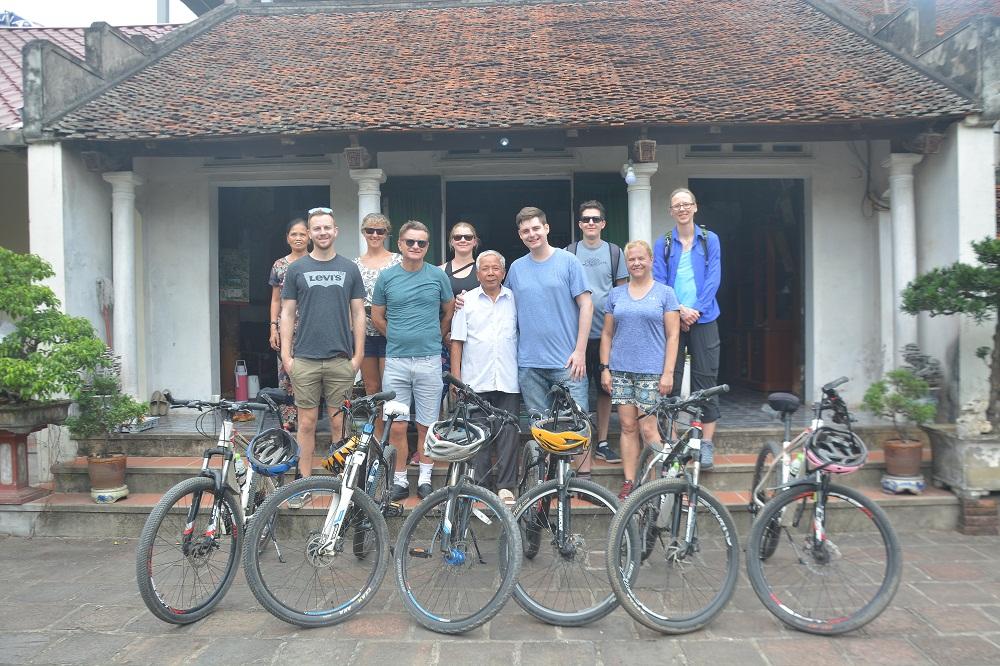
Bike Tours Hanoi’s countryside Vespa experiences include visits to traditional family homes where travelers can meet residents, drink tea, taste peanut candy, and learn about everyday life through the guide’s translation.
One published countryside route describes a visit to a 200-year-old traditional house, providing an opportunity to talk with the family and learn about their daily routines.
This type of interaction gives travelers an opportunity to ask questions about Vietnamese family life, homes, food, traditions, and the changes taking place in rural communities.
Discover Vietnamese Bonsai Culture
Vietnamese bonsai is another cultural tradition featured in Bike Tours Hanoi’s countryside Vespa experiences.
A visit to a bonsai garden allows travelers to see how carefully trained trees are cultivated and shaped over many years.
The experience is more than looking at plants. The guide can explain the artistic process, while meeting the person who cares for the trees provides a personal connection to the tradition.
For travelers interested in gardening, photography, or Vietnamese craftsmanship, this is one of the more unusual stops available outside the city center.
Visit a Traditional Vietnamese Market
Markets are among the best places to observe everyday Vietnamese culture.
A traditional market is not designed as a tourist attraction. Residents visit to purchase vegetables, fruit, meat, herbs, household products, and ingredients for their daily meals.
Bike Tours Hanoi’s Vespa routes include wet-market visits where travelers can see this daily activity and sample tropical fruits.
The experience can be especially interesting in the morning, when vendors are busiest and fresh produce arrives.
Explore Hoi Phu Village and Traditional Broom Making
Some longer Vespa routes travel to Hoi Phu Village, an area known for traditional broom-making.
Here travelers can see how broom grass is transformed into practical household products.
Traditional crafts such as broom-making provide an important connection to rural Vietnamese culture because they demonstrate how village communities historically developed specialized skills and small-scale industries.
Instead of simply buying a souvenir, visitors can see the production process and understand the people and work behind the finished product.
Visit Co Loa Ancient Citadel
For travelers interested in ancient Vietnamese history, a countryside Vespa route can continue to Co Loa Ancient Citadel.
Co Loa dates back to the ancient period and is associated with King An Duong Vuong, one of the important figures in Vietnam’s early historical traditions.
The site is particularly significant because of its unusual defensive structure and its connection with early Vietnamese state formation.
Visiting Co Loa by Vespa also demonstrates how quickly the landscape changes outside Hanoi. After riding through busy city streets, travelers can reach quieter roads, villages, agricultural land, and ancient historical sites.
Experience Vietnamese Food as Part of the Culture
Food is an essential part of a Hanoi cultural experience.
Bike Tours Hanoi’s Vespa experiences include traditional Vietnamese dishes such as Bún Chả, Bánh Cuốn, Nem Rán, seasonal specialties, tropical fruit, and Vietnamese coffee.
Food stops are not simply breaks between sightseeing locations.
The guide can explain what ingredients are used, how dishes are prepared, and how they fit into everyday Vietnamese eating habits.
Bún Chả
Bún Chả is one of Hanoi’s signature dishes.
It combines grilled pork, rice noodles, fresh herbs, vegetables, and a sweet-and-savory dipping sauce.
The grilled pork is typically cooked over charcoal, giving the dish a distinctive smoky aroma.
Bánh Cuốn
Bánh Cuốn consists of delicate steamed rice sheets filled with ingredients such as minced pork and wood-ear mushrooms.
The thin rice sheets are prepared fresh and served with dipping sauce, herbs, and other accompaniments.
For visitors, watching how these sheets are made can be just as interesting as eating them.
Nem Rán
Nem Rán, commonly known internationally as Vietnamese fried spring rolls, combines a crispy wrapper with a savory filling.
It is one of the dishes that demonstrates the importance of texture in Vietnamese cuisine: crisp exterior, flavorful filling, fresh herbs, and dipping sauce.
Finish With Vietnamese Egg Coffee
Coffee is another important part of Hanoi’s cultural identity.
A Vespa cultural experience can finish at a traditional café with Vietnamese drip coffee or egg coffee.
Egg coffee, known as cà phê trứng, combines strong Vietnamese coffee with a thick sweet egg mixture. The result is rich and creamy while retaining the strong flavor of Vietnamese coffee underneath.
Bike Tours Hanoi includes egg coffee in several of its Vespa and motorbike experiences.
For many travelers, the coffee stop becomes one of the most memorable cultural moments because it provides time to sit, talk with the guide, and watch Hanoi’s streets from a café.
Learn About Hanoi From Female Riders
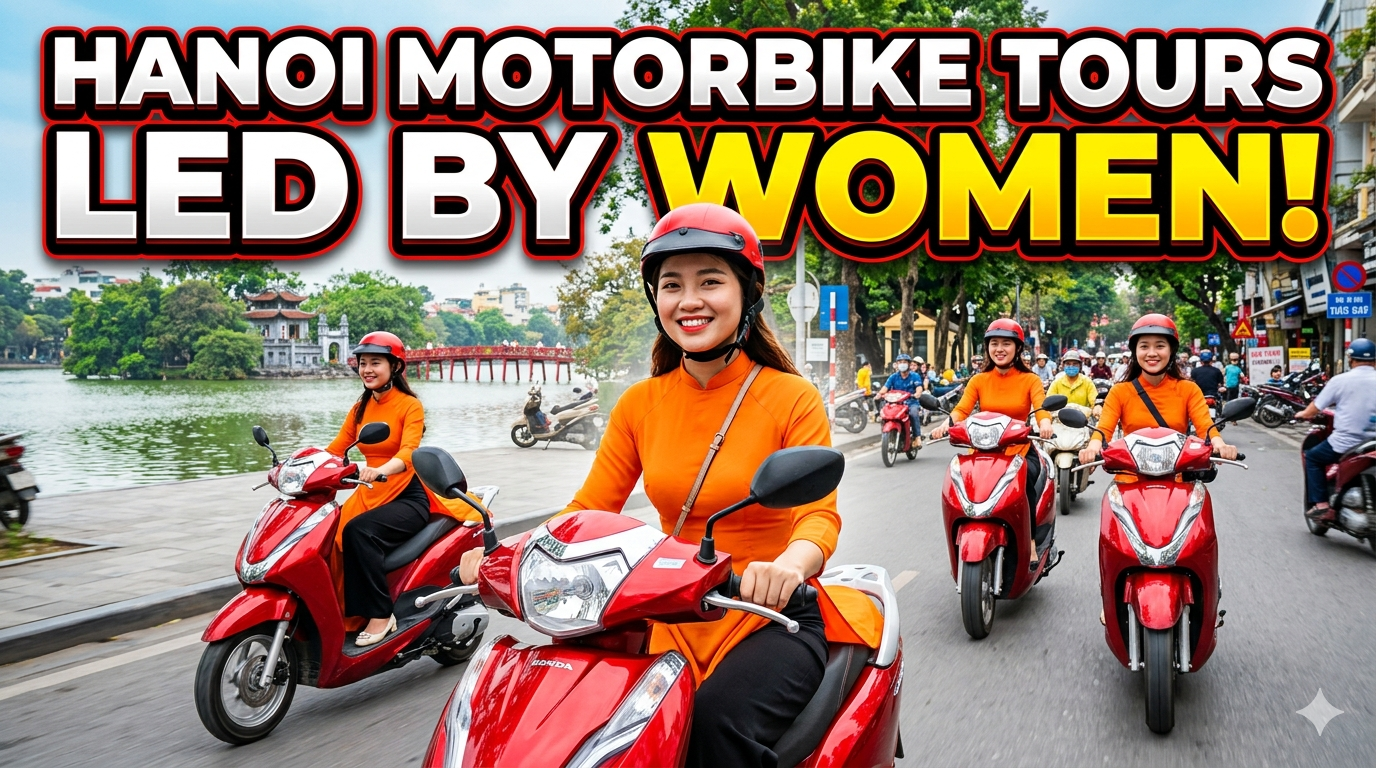
Bike Tours Hanoi offers Vespa experiences led by experienced female riders and guides.
The role of the guide is not limited to operating the scooter. The company’s tour descriptions emphasize women riders as drivers, storytellers, and cultural guides who share information about Hanoi’s history, food, neighborhoods, and everyday life.
This creates a more personal experience because travelers can ask questions throughout the journey rather than simply listening to a fixed explanation at major attractions.
The published Vespa tours use comfortable passenger scooters with backrests, and guests ride as passengers behind experienced riders.
Do You Need to Know How to Ride a Vespa?
No.
The Vespa experiences are designed as pillion tours, meaning the guest sits behind the professional rider.
Bike Tours Hanoi states that previous scooter or motorcycle experience is not required for its passenger Vespa tours.
This makes the experience suitable for international travelers who want to explore Hanoi by scooter but do not want to navigate the city’s traffic themselves.
The rider takes care of navigation and road conditions while you concentrate on the scenery, food, photography, and cultural experiences.
Hanoi City or Hanoi Countryside?
If your main interest is Vietnamese history and urban culture, choose a city Vespa route.
A city route can include:
- Hanoi Old Quarter
- French Quarter
- Hoan Kiem Lake
- West Lake
- Truc Bach Lake
- Hanoi Opera House
- Ba Dinh Square
- Ho Chi Minh Mausoleum
- Huu Tiep Lake
- Residential neighborhoods
- Traditional markets
- Long Bien Bridge
If you want a broader cultural experience, choose a countryside Vespa route.
A longer route can combine:
- Long Bien Bridge
- Red River countryside
- Vegetable farms
- Traditional villages
- Bonsai gardens
- Wet markets
- Co Loa Ancient Citadel
- Hoi Phu traditional craft village
- Traditional family homes
- Vietnamese lunch
- Egg coffee
This second option is particularly suitable for travelers who want to understand the relationship between modern Hanoi and the traditional communities surrounding it.
Hanoi Vespa Cultural Experience for Photographers
A Vespa tour is also highly suitable for street photography.
The route constantly produces changing scenes: vendors carrying food, narrow alleyways, traditional houses, market activity, farmers working beside the Red River, bridges, old buildings, cafés, temples, and passing scooters.
Morning tours provide especially strong opportunities because the streets are filled with daily activities while the light is often softer.
The ability to stop at selected locations also makes a Vespa more flexible than a large tour vehicle.
Hanoi Culture Is More Than Famous Attractions
The most important lesson from a Hanoi Vespa cultural experience is that Vietnamese culture is not confined to temples and museums.
Culture appears in the way families use their homes, how markets operate, how people drink coffee, how food is prepared, how farmers cultivate land beside the Red River, how crafts are passed between generations, and how residents use narrow streets as part of their everyday lives.
A Vespa simply provides an efficient way to move between these different cultural environments.
Why Choose a Hanoi Vespa Cultural Experience?
A well-designed Vespa cultural tour gives you several experiences in one journey.
You can learn about Hanoi’s history at Long Bien Bridge and Huu Tiep Lake, observe contemporary city life in residential neighborhoods, experience Vietnamese food at family-run eateries, meet people in traditional communities, see rural landscapes beside the Red River, and finish with Vietnamese coffee.
This combination makes the experience particularly valuable for travelers who want people and culture rather than sightseeing alone.
Book Your Hanoi Vespa Cultural Experience
Bike Tours Hanoi offers half-day and full-day Vespa experiences around Hanoi, including city sightseeing, hidden neighborhoods, food, markets, Red River countryside, traditional villages, cultural sites, and routes led by experienced female riders.
Current published Vespa options include a 2.5-hour Vespa tour at $39 per person, a sunrise Vespa tour at $89 per person, a sunset and night scooter tour at $69 per person, and a full-day city and outskirts Vespa tour at $110 per person. Prices and itineraries can change, so confirm your selected tour when booking.
Contact Bike Tours Hanoi
Website: biketourshanoi.com
WhatsApp / Phone: +84 982 416 518
Email: info@biketourshanoi.com
For a cultural experience that combines Hanoi’s traditions, people, food, history, neighborhoods, and countryside, contact Bike Tours Hanoi and ask which Vespa route best matches your interests and available time.
