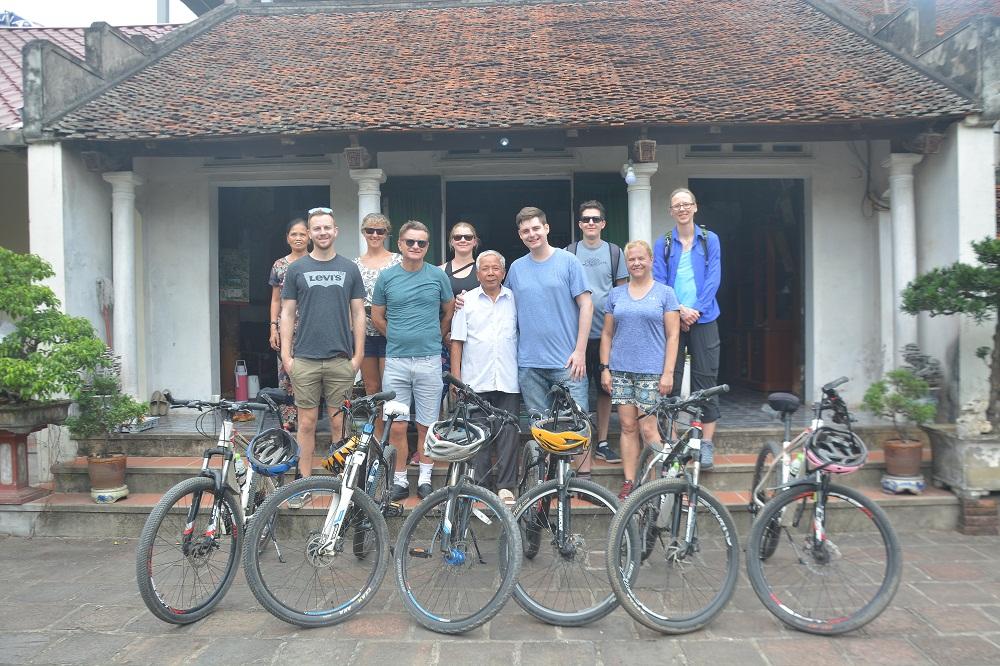
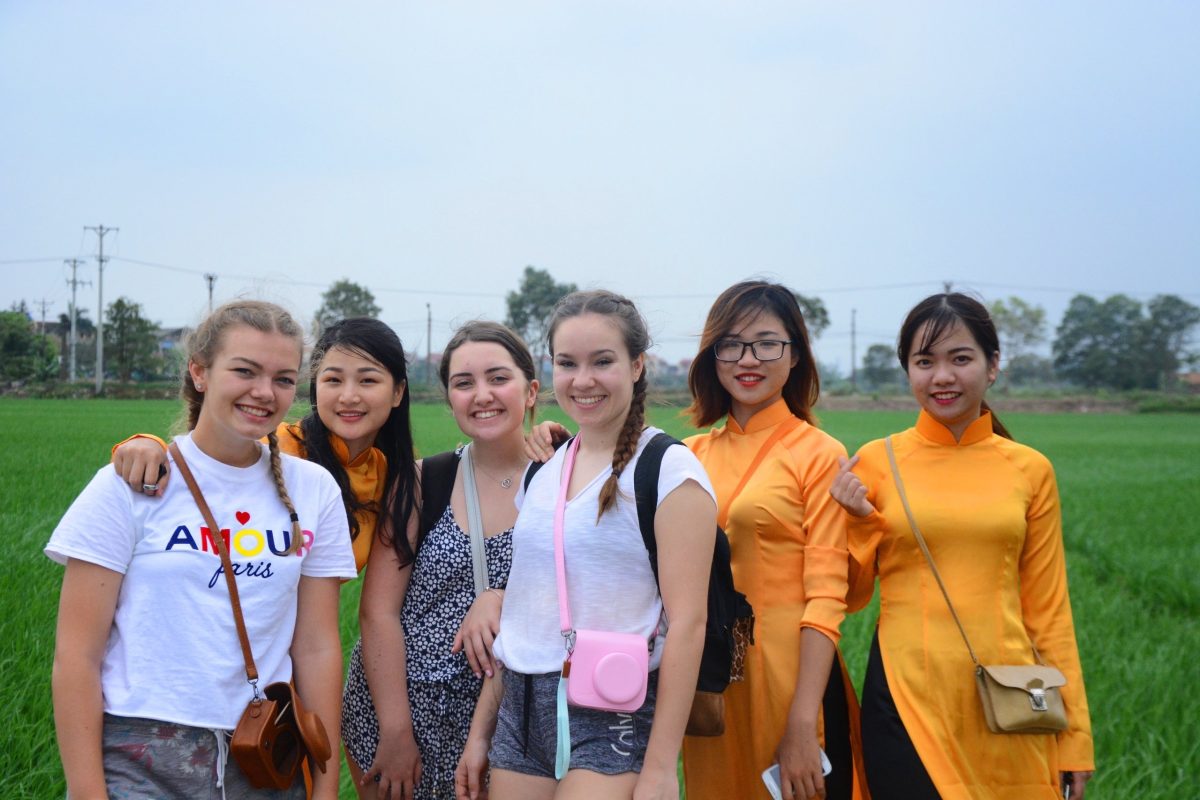
Hanoi Cultural Experiences Hosted by Female Guides
Hanoi is one of the best cities in Vietnam for travelers who want to understand culture through more than museums and monuments. The capital combines centuries of history with everyday traditions that are still visible in its food, coffee culture, family life, religious practices, architecture, crafts, markets and neighborhoods. For women travelers, experiencing Hanoi with a female Vietnamese guide can add another dimension because the journey can include conversations about women’s lives, family traditions, work, education, food, fashion and the changes taking place in modern Hanoi.
A cultural tour should not feel like a series of historical dates. The most useful Hanoi cultural experiences connect what you see with how people live today. You might visit the Vietnamese Women’s Museum in the morning, learn about Buddhism at a historic pagoda, eat bun cha for lunch, explore the Old Quarter on foot, meet a craft artisan in the afternoon and finish the day with Vietnamese coffee or a private food experience. This combination creates a much deeper understanding of the capital.
Vietnam Women Travel – Premium Private Tours Led by Women offers private Hanoi experiences hosted by female guides for solo travelers, couples, families and private groups. Rather than placing every traveler on the same fixed route, the experience can be customized around history, food, religion, art, crafts, photography, women’s culture, architecture and everyday Hanoi life.
What Makes a Female-Guided Cultural Experience in Hanoi Different?
A professional female guide does more than explain the name and history of an attraction. She can help you understand the context behind what you are seeing.
When you visit a family-oriented museum, she can explain how Vietnamese households have changed. When you enter a Buddhist temple, she can explain customs and appropriate behavior. When you eat street food, she can show you how the dish is traditionally eaten. When you walk through the Old Quarter, she can explain why houses are narrow, why particular streets developed around certain trades and how commerce continues to shape the neighborhood.
Most importantly, you can ask questions naturally.
You can talk about Vietnamese women, careers, family, marriage, education, fashion, food, travel and modern life without making the conversation feel like a formal lecture.
That personal interaction is one of the biggest advantages of choosing a female-hosted private cultural experience.
1. Explore Hoan Kiem Lake Through Hanoi’s History
Start your cultural experience at Hoan Kiem Lake, the symbolic center of Hanoi.
The lake is not simply a scenic attraction. It is closely connected with Vietnamese history, legends and the social life of the capital.
Walk around the lake with your guide and learn about the legend of the returned sword associated with Emperor Le Loi and the lake’s Vietnamese name, Hoan Kiem.
Then look at how the area functions today.
In the early morning, residents exercise around the lake. On weekends, surrounding streets become pedestrian areas where people gather, socialize and enjoy performances. Vietnam Tourism highlights Hoan Kiem and its pedestrian streets as an important place to experience Hanoi’s social atmosphere.
Recommended time: 45–60 minutes.
Best time: early morning or late afternoon.
2. Visit Ngoc Son Temple
Cross the red bridge to Ngoc Son Temple on Hoan Kiem Lake.
This small temple introduces several aspects of Vietnamese religious and cultural traditions.
Your guide can explain the historical figures associated with the temple, Vietnamese beliefs and the symbolism you see inside.
Do not rush through it.
Look at the architecture, incense, altars and decorations.
If you are unfamiliar with Vietnamese religious practices, this is a good place to ask questions.
3. Discover the Old Quarter as a Living Cultural Area
The Old Quarter is one of Hanoi’s most important cultural environments.
But rather than simply walking along the most photographed streets, ask your guide to explain how the neighborhood developed.
Historically, many streets became associated with particular trades and products. The narrow architecture reflects the way properties developed along commercial streets.
Today, the Old Quarter combines:
Historic houses
Street food
Coffee shops
Markets
Family businesses
Craft stores
Hotels
Restaurants
Modern boutiques
Vietnam Tourism recommends exploring the Old Quarter through its narrow streets, traditional shops, cafés, hidden spaces and food culture.
A female guide can turn this walk into a conversation about how Hanoi has changed while maintaining many traditions.
4. Learn About Vietnamese Women at the Vietnamese Women’s Museum
For women travelers, this is one of the most valuable cultural stops in Hanoi.
The Vietnamese Women’s Museum presents stories connected with women, family, traditions, clothing and history.
The museum is located at 36 Ly Thuong Kiet Street, Hoan Kiem District.
Instead of simply walking through the exhibition halls, spend time discussing what you see with your female guide.
You can explore questions such as:
How have women’s roles changed in Vietnam?
What is traditional Vietnamese family life like?
How do marriage customs differ between generations?
How important is education for Vietnamese women?
How have women participated in Vietnam’s history?
What is modern working life like for women in Hanoi?
This makes the museum relevant to contemporary travelers rather than just a historical attraction.
5. Visit the Temple of Literature
The Temple of Literature is one of Hanoi’s most important historical sites and is closely associated with education and scholarship.
Walk through the courtyards and study the architecture, stone stelae and traditional layout.
Your guide can explain the importance of Confucian education in Vietnamese history and how examinations and scholarship influenced society.
For women travelers, it can also lead to a broader discussion about education and how opportunities for Vietnamese women have changed over time.
Allow around 60–90 minutes.
6. Understand Vietnam’s Three Major Cultural Traditions
A good Hanoi cultural experience should explain that Vietnamese spiritual life has developed through several traditions rather than one single system.
Your guide can help you understand the interaction between:
Buddhism
Taoism
Folk Beliefs
These traditions have influenced temples, family rituals, festivals, ancestor worship, architecture and everyday customs.
For example, when visiting a pagoda, you may encounter Buddhist elements while also seeing practices connected with broader Vietnamese folk traditions.
Understanding this distinction makes temple visits much easier for international travelers.
7. Experience Buddhism at Tran Quoc Pagoda
Tran Quoc Pagoda, located beside West Lake, provides another opportunity to explore Vietnamese Buddhist culture.
Your guide can explain:
Buddhist symbols
Incense customs
Temple etiquette
Prayer practices
Architectural features
The role of Buddhism in Vietnamese society
Dress modestly and avoid loud conversations inside religious areas.
A good cultural tour gives you enough context to participate respectfully without treating religious sites like photo studios.
8. Explore West Lake and Truc Bach
West Lake offers a different cultural rhythm from the Old Quarter.
Instead of narrow streets and busy commerce, you find lakeside neighborhoods, cafés, restaurants, temples and residential areas.
Vietnam Tourism recommends West Lake for walking, cycling, breakfast and enjoying the lake environment.
Combine West Lake with Truc Bach Lake for a half-day experience.
This is particularly suitable for travelers who want culture at a slower pace.
9. Discover Ngu Xa’s Craft Heritage
Ngu Xa is associated with Hanoi’s traditional bronze-casting heritage.
A cultural experience here can show you how traditional craftsmanship connects with modern Hanoi.
Ask about:
Bronze casting
Traditional products
Tools
Artisan skills
How the craft has changed
How younger generations continue the tradition
Hanoi’s heritage programming includes experiences around Ngu Xa and its bronze-casting tradition.
This is much more meaningful than buying an unidentified souvenir.
10. Learn About Hanoi Through Vietnamese Food
Food is one of the fastest ways to understand Hanoi.
A cultural food experience can include:
Pho
Bun cha
Banh cuon
Cha ca
Cốm
Vietnamese tea
Egg coffee
Each dish can become a conversation.
Why is it associated with Hanoi?
When is it normally eaten?
How is it prepared?
What ingredients are important?
How do people traditionally eat it?
This is why a food tour with a knowledgeable female guide can be more valuable than simply visiting a restaurant.
11. Start With Hanoi Pho
Pho is one of the first dishes most international visitors want to try.
But instead of treating it as simply “Vietnamese noodle soup,” learn how Hanoi’s version is traditionally prepared and eaten.
Your guide can explain the broth, noodles, meat, herbs and condiments.
For many travelers, breakfast pho followed by Vietnamese coffee becomes one of the defining memories of Hanoi.
12. Try Bun Cha
Bun cha is particularly associated with Hanoi.
The combination of grilled pork, rice noodles, fresh herbs and dipping sauce represents a style of Vietnamese food that balances grilled flavors with fresh ingredients.
Your guide can demonstrate how to combine everything.
It is a small detail, but it makes the meal much easier for first-time visitors.
13. Discover Banh Cuon
Banh cuon is another dish worth including in a Hanoi cultural itinerary.
The thin steamed rice rolls are delicate and light.
Watch how the rice batter is steamed and rolled, then learn how the finished dish is served.
This is especially interesting when you can see the preparation rather than simply receiving a plate at a restaurant.
14. Experience Cha Ca
Cha ca is another Hanoi specialty.
The dish offers an opportunity to explore how fish, herbs, noodles and Vietnamese seasonings come together.
Ask your guide about the history of the dish and how it became associated with Hanoi.
A good cultural guide should be able to explain both the food and the context.
15. Experience Vietnamese Egg Coffee
Coffee is an important part of modern Hanoi culture.
Try traditional Vietnamese drip coffee, then compare it with egg coffee or another specialty style.
Vietnam Tourism highlights Hanoi’s distinctive coffee culture as part of the city’s modern identity.
Spend time sitting in the café rather than treating it as a quick refreshment stop.
Watch people work, meet friends and move through the neighborhood.
16. Visit a Traditional Market
Markets are excellent places to understand everyday Vietnamese life.
Your female guide can explain:
Vegetables
Herbs
Fruit
Spices
Fresh seafood
Meat
Flowers
Prepared foods
If you are interested in Vietnamese cooking, ask about ingredients you have never seen before.
You will leave with a better understanding of what goes into Vietnamese meals.
17. Experience Hanoi’s Flower Culture
Hanoi’s flower sellers are a beautiful part of the city’s visual identity.
Early morning is ideal for seeing flower bicycles moving through the streets.
For photographers, this can become a special cultural experience.
Ask before taking close-up portraits.
The purpose is not simply to photograph a colorful bicycle but to understand the role flowers play in Vietnamese homes, celebrations and everyday life.
18. Explore Traditional Vietnamese Tea
Tea is closely connected with Vietnamese hospitality.
A private tea experience can introduce you to:
Tea preparation
Serving etiquette
Conversation
Hospitality
Family traditions
Social customs
Recent Hanoi heritage programming has included traditional tea culture as part of the city’s broader cultural experiences.
This is particularly relaxing after a morning of sightseeing.
19. Discover Cốm and Hanoi’s Seasonal Food Culture
Cốm, made from young green rice, is strongly associated with Hanoi’s traditional food culture.
If you visit during the appropriate season, ask your guide where to try it and how it is produced.
You can learn:
When the rice is harvested
How it is processed
How it is traditionally packaged
How it is used in other foods
Hanoi heritage experiences have also included demonstrations connected with traditional bánh cốm production.
20. Explore Vietnamese Art
Hanoi has a strong art scene.
The Vietnam Fine Arts Museum offers an excellent introduction to Vietnamese artistic traditions, while contemporary galleries provide another perspective on modern Vietnam.
Vietnam Tourism identifies Hanoi as an important center for Vietnamese art and highlights both traditional and contemporary art experiences.
For women who love design and creativity, combine art with:
Coffee
Fashion
Crafts
Boutiques
Photography
21. Meet Vietnamese Artisans
If you enjoy handmade products, include an artisan experience.
Depending on the route, this could involve:
Bronze
Ceramics
Textiles
Embroidery
Traditional food
Handmade products
The most useful part is not necessarily buying something.
It is learning how the product is made.
22. Explore Hanoi’s French Colonial Heritage
The French Quarter provides another layer of Hanoi’s history.
Walk around the area and look at:
French colonial buildings
Hanoi Opera House
Historic hotels
Wide boulevards
Government buildings
Old villas
A female guide can explain how French influence affected Hanoi’s architecture, food, urban planning and social history.
23. Discover Hanoi’s Architecture Through a Walking Tour
Architecture becomes more interesting when you understand why buildings look the way they do.
Your guide can compare:
Ancient temples
Old tube houses
French colonial buildings
Soviet-era apartments
Modern high-rises
This creates a visual history of Hanoi.
You are no longer simply looking at buildings; you are watching the city evolve.
24. Explore Hanoi’s Subsidy-Era History
Hanoi’s cultural story continues beyond ancient dynasties.
Heritage experiences focused on the subsidy period provide insight into how ordinary Vietnamese families lived during a period of economic difficulty and limited consumer goods.
Hanoi’s current heritage programming includes reconstructed domestic environments and foods associated with that era.
For travelers interested in social history, this can be one of the most revealing experiences in the city.
25. Learn About Hanoi’s Traditional Leisure Culture
Traditional Hanoi culture included a strong appreciation for refined leisure.
Tea, flowers, food, music, poetry and conversation could all form part of social life.
Modern cultural programs have explored these traditions through what is sometimes described as Hanoi’s “eight refined pleasures.”
A private cultural experience can introduce these ideas in a contemporary and accessible way.
26. Take a Female-Led Hanoi Vespa Tour
A Vespa tour can combine culture and transportation.
Instead of simply visiting five attractions, ride through different neighborhoods and stop whenever something catches your attention.
Your route might include:
Old Quarter
French Quarter
West Lake
Truc Bach
Residential streets
Long Bien
Food stops
With a female driver, the journey can also include informal conversations about life in Hanoi.
27. Take a Private Hanoi Motorbike Food Experience
If food is your priority, combine sightseeing with street-level transportation.
Ride between several food stops instead of spending the whole evening in one restaurant.
This allows you to experience Hanoi’s:
Traffic
Street food
Neighborhoods
Night atmosphere
Coffee culture
all in one evening.
28. Choose a Private Jeep for a Comfortable Cultural Day
For travelers who want an open-air experience without riding a scooter, a private Jeep offers another option.
It is especially useful for families and private groups.
The itinerary can combine:
Historic Hanoi
Neighborhoods
West Lake
Long Bien
Food
Photography
without following a fixed group-tour schedule.
29. Learn How Vietnamese People Celebrate Family Life
Family is central to Vietnamese culture.
A female guide can explain traditions surrounding:
Ancestor worship
Tet
Family gatherings
Marriage
Food
Respect for older generations
Children
These subjects often explain everyday Vietnamese behavior better than a historical timeline.
30. Understand Vietnamese Religious Etiquette
Before visiting temples, ask your guide about appropriate behavior.
For example:
Dress respectfully.
Avoid loud conversations.
Do not touch sacred objects unnecessarily.
Ask before photographing religious ceremonies or individuals.
Follow the instructions of the temple.
These small details allow you to participate respectfully rather than simply observe.
31. Experience Hanoi Through Women’s Stories
One of the most valuable reasons to choose a female guide is the opportunity to hear personal perspectives.
Ask your guide:
What was Hanoi like when you were growing up?
How has the city changed?
What foods remind you of childhood?
How do women work and travel today?
What traditions remain important?
What do younger Vietnamese women think about traditional customs?
These conversations can become the most memorable part of the tour.
32. Take a Women-Focused Photography Walk
Combine culture and photography.
You can photograph:
Women’s fashion
Flower sellers
Markets
Cafés
Traditional houses
Crafts
Street food
Lakes
Your female guide can help you understand when it is appropriate to photograph people and how to approach them respectfully.
33. Experience Hanoi’s Weekend Culture
If your trip falls on a weekend, use the pedestrian areas around Hoan Kiem for people-watching.
You may encounter:
Families
Young people
Street performers
Traditional games
Music
Food
Exercise groups
This gives you a very different view of Hanoi from a museum visit.
34. Combine Culture With Relaxation
Cultural travel does not mean spending twelve hours walking.
A premium private itinerary can include:
Morning sightseeing
Cultural visit
Long lunch
Hotel rest
Spa
Sunset
Private dinner
This is particularly useful for women who want a comfortable luxury holiday rather than an intensive sightseeing schedule.
35. Build Your Hanoi Cultural Experience Around Your Interests
If You Love History
Choose the Temple of Literature, museums, historic neighborhoods, French colonial architecture and heritage sites.
If You Love Food
Choose markets, pho, bun cha, banh cuon, cha ca, coffee and traditional desserts.
If You Love Women’s Culture
Choose the Vietnamese Women’s Museum, female-led experiences and conversations about modern Vietnamese life.
If You Love Art
Choose the Fine Arts Museum, contemporary galleries, Vietnamese designers and artisan workshops.
If You Love Photography
Choose flower sellers, Old Quarter streets, West Lake, Long Bien and residential neighborhoods.
If You Prefer Luxury
Choose private transportation, a female guide, premium dining, flexible sightseeing, spa time and a carefully paced itinerary.
36. A 3-Day Hanoi Cultural Experience With a Female Guide
Day 1 — History, Women and Hanoi Food
Begin at Hoan Kiem Lake and Ngoc Son Temple before walking through the Old Quarter. Stop for Vietnamese coffee and continue to the Vietnamese Women’s Museum. Have lunch with a Hanoi specialty such as bun cha, then explore the French Quarter and finish with a private evening food experience.
Day 2 — Religion, Art and Lakeside Hanoi
Start at the Temple of Literature before visiting the Fine Arts Museum. Continue to West Lake and Tran Quoc Pagoda, with your guide explaining Buddhism and Vietnamese religious traditions. Explore Truc Bach and Ngu Xa, then finish the afternoon with tea or coffee and enjoy a relaxed dinner.
Day 3 — Everyday Hanoi and Female-Led Exploration
Begin with a traditional market or food experience. Then take a private female-led Vespa or motorbike tour through residential neighborhoods, Long Bien and other areas outside the standard sightseeing route. Stop for photographs and street food along the way before returning to the center for a final Vietnamese dinner.
37. A More Relaxed 5-Day Cultural Itinerary
If you have five days, avoid packing everything into three.
Day 1: Hoan Kiem Lake, Ngoc Son Temple, Old Quarter and Hanoi food.
Day 2: Vietnamese Women’s Museum, Temple of Literature, French Quarter and Vietnamese art.
Day 3: West Lake, Tran Quoc Pagoda, Truc Bach, Ngu Xa and tea culture.
Day 4: Private female-led Vespa or motorbike experience, markets, neighborhoods and Long Bien.
Day 5: Vietnamese design, shopping, coffee, spa, free time and private farewell dinner.
The additional time allows you to slow down and spend longer at places that interest you.
38. What to Tell Your Female Guide Before the Tour
A personalized cultural experience works best when your guide knows what you want before the day begins.
Tell her:
Your age range
Travel dates
Number of travelers
Hotel
Food preferences
Dietary restrictions
Photography interests
Shopping interests
Cultural interests
Walking ability
Preferred pace
Transportation preference
For example:
“We are two women visiting Hanoi for four days. We love food, photography, Vietnamese women’s culture and traditional crafts. We want to see the major landmarks but prefer quieter neighborhoods and plenty of time for coffee.”
That is enough information to create a much more useful itinerary than simply booking a generic city tour.
39. Why Private Cultural Tours Are Better for Flexible Travelers
Private travel allows the day to respond to you.
If you love a museum, stay longer.
If you find an interesting market, stop.
If you want coffee, take a break.
If it becomes too hot, return to the hotel.
If you discover that you love Vietnamese food, add another food stop.
If you are tired, reduce the schedule.
This is particularly valuable for women who want a comfortable and personal Hanoi holiday.
40. Hanoi Culture Is Best Experienced Through People
Buildings tell part of Hanoi’s story.
Food tells another part.
Museums explain history.
But people connect everything together.
A female guide can help you understand the city through conversations about work, family, food, traditions and modern life.
That is why a female-hosted cultural experience can be much more than sightseeing.
It gives you someone who can explain not only what Hanoi is, but also why Hanoi feels the way it does.
Why Choose Vietnam Women Travel?
Vietnam Women Travel – Premium Private Tours Led by Women creates private Hanoi cultural experiences for travelers who want more than a standard sightseeing route.
Your experience can include:
Private female guide
Private transportation
Female Vespa or motorbike driver
Private Jeep
Vietnamese Women’s Museum
Hoan Kiem Lake
Old Quarter
Temple of Literature
West Lake
Tran Quoc Pagoda
Truc Bach
Ngu Xa
Long Bien
Vietnamese food
Coffee culture
Tea culture
Traditional crafts
Art and design
Photography
Shopping
Women’s cultural experiences
Private dining
The tours are private and led by women, rather than women-only group tours. Solo travelers, couples, families, mother-daughter travelers and private groups can all request an itinerary designed around their interests.
Final Thoughts
The best Hanoi cultural experience is not necessarily the one that visits the greatest number of attractions.
It is the one that helps you understand the city.
Drink the coffee slowly.
Ask why the houses are narrow.
Learn why the lake is important.
Understand what women experienced in different generations.
Watch how food is prepared.
Listen to your guide explain Vietnamese traditions.
Walk through neighborhoods where people actually live.
Visit an artisan.
Ride through Hanoi at street level.
Sit beside West Lake at sunset.
Then you will leave Hanoi with more than photographs.
You will leave with stories.
VIETNAM WOMEN TRAVEL
Vietnam Women Travel – Premium Private Tours Led by Women
📍 91 Tho Nhuom Street, Hoan Kiem District, Hanoi, Vietnam
📞 Hotline/WhatsApp: +84988402008 / +84982416518 / +84981090989
📧 Email: info@vietnamwomentravel.com**
🌐 Website: https://vietnamwomentravel.com/
Website: Vietnam Women Travel
To request a private Hanoi cultural experience, send your travel dates, number of travelers, hotel, interests, food preferences, preferred pace and transportation preference. Vietnam Women Travel can create a personalized Hanoi itinerary hosted by a female guide around the culture, food, history, art, crafts and everyday experiences you most want to discover.
